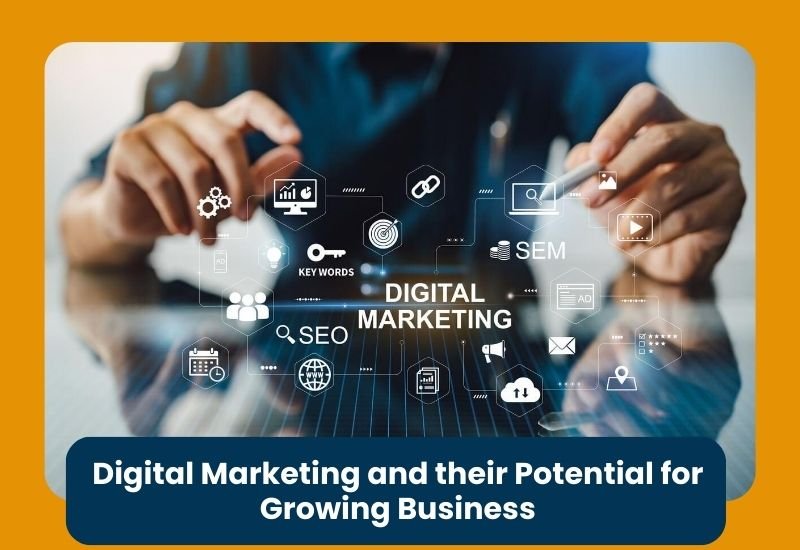
Digital Marketing and their Potential for Growing Business

Digital Marketing and their Potential for Growing Business

Digital Marketing and Its Potential for Growing Your Business

Category: Digital Marketing  |  Reading Time: ~16 min  |  ~3,600 words

In an era where consumers spend hours each day browsing the internet, watching videos, scrolling social media, and researching products online, having a strong digital presence is no longer optional — it is the foundation of modern business success. This comprehensive guide explores the most powerful digital marketing services available today, explains how each one works, and shows you exactly how they can help your business grow faster and reach further than ever before.

Table of Contents

What Is Digital Marketing and Why Does It Matter?

Search Engine Optimization (SEO)

Search Engine Marketing (SEM)

Content Marketing

Pay-Per-Click (PPC) Advertising

Social Media Marketing (SMM)

Social Media Optimization (SMO)

Email Marketing

Comparing Digital Marketing Channels

How to Build a Complete Digital Marketing Strategy

Common Digital Marketing Mistakes to Avoid

Why SkySphere Is the Right Digital Marketing Partner

Final Thoughts

1. What Is Digital Marketing and Why Does It Matter?

Digital marketing refers to all marketing efforts that use the internet or electronic devices to connect businesses with their target audiences. Unlike traditional marketing channels such as print advertising, television commercials, or billboards, digital marketing allows businesses to reach specific audiences with precision, measure results in real time, and adjust their strategies based on actual performance data.

The shift toward digital has been dramatic and irreversible. Today, more than five billion people around the world use the internet regularly, and that number continues to grow. Consumers research products online before buying, compare prices across multiple websites, read reviews, and rely on social media recommendations from people they trust. For a business to remain competitive in this environment, it must establish a presence in the digital spaces where its customers already spend their time.

Digital marketing is not a single tool but rather an ecosystem of interconnected strategies — each with its own strengths, best use cases, and metrics. Understanding how these channels work individually and how they complement each other is the key to building a marketing approach that delivers consistent, measurable growth.

Suggested Image: Digital Marketing Overview Infographic

Upload an infographic showing the main digital marketing channels (SEO, SEM, PPC, Social Media, Content, Email) connected to a central “Business Growth” hub

5B+

Global internet users

70%

Users click only organic results

$600B+

Global digital ad spend (2024)

4.2x

Higher ROI vs traditional ads

2. Search Engine Optimization (SEO)

Search Engine Optimization is the process of improving your website so that it ranks higher in unpaid, organic search engine results on platforms like Google, Bing, and Yahoo. When someone types a query into a search engine, the algorithm evaluates hundreds of ranking signals to determine which pages are most relevant and trustworthy. SEO is the discipline of making your website as strong as possible across all of those signals.

It is one of the most valuable long-term investments a business can make in its online presence. Unlike paid advertising, which stops generating traffic the moment you stop spending money, good SEO continues delivering results over months and years. A well-optimized page can attract consistent organic traffic without ongoing ad spend — making it one of the most cost-effective digital marketing channels available.

Suggested Image: SEO Process Diagram

A step-by-step visual showing: Keyword Research → On-Page Optimization → Technical SEO → Link Building → Rankings Improvement

Key Components of SEO

On-Page SEO

On-page SEO involves optimizing the content and HTML elements of individual web pages. This includes selecting the right keywords and incorporating them naturally into titles, headings, meta descriptions, and body content. It also involves ensuring that content is genuinely useful, well-structured, and comprehensive enough to satisfy the reader’s intent.

Technical SEO

Technical SEO addresses the behind-the-scenes elements of your website that affect how search engines crawl and index it. This includes page load speed, mobile responsiveness, secure HTTPS connections, clean URL structures, and the elimination of broken links or duplicate content. Even excellent content can underperform in search results if technical issues prevent search engines from properly reading and ranking it.

Off-Page SEO and Link Building

Off-page SEO refers primarily to the practice of building high-quality backlinks — links from other reputable websites pointing back to yours. Search engines interpret backlinks as votes of confidence in your content. The more authoritative and relevant the sites linking to you, the stronger the positive impact on your rankings.

Local SEO

For businesses that serve specific geographic areas, local SEO is an essential component of the overall strategy. This includes optimizing your Google Business Profile, building consistent citations across local directories, and generating genuine customer reviews that signal trustworthiness to both search engines and potential customers.

SEO Type Focus Area Primary Benefit Time to See Results

On-Page SEO Content, keywords, meta tags Better relevance for target queries 4–8 weeks

Technical SEO Site speed, crawlability, structure Improved indexing and user experience 2–6 weeks

Off-Page SEO Backlinks, brand mentions Higher domain authority and trust 3–6 months

Local SEO Google Business, local citations Visibility in local map pack results 4–10 weeks

3. Search Engine Marketing (SEM)

Search Engine Marketing refers to the use of paid advertising on search engines to increase a website’s visibility in search results. While SEO focuses on earning rankings organically over time, SEM delivers immediate visibility by placing your ads at the top of search results pages for your chosen keywords — typically marked with a small “Sponsored” label.

The most widely used SEM platform is Google Ads, followed by Microsoft Advertising (for Bing). Businesses using SEM bid on specific keywords that their target audience is likely to search for, and their ads appear when those searches are made. The advertiser pays only when a user actually clicks on the ad — a model known as pay-per-click, which we will explore further in a later section.

SEM is particularly effective for businesses that need results quickly — such as those launching a new product, promoting a time-sensitive offer, or entering a new market. When combined with a strong SEO foundation, SEM creates a comprehensive search presence that captures both immediate paid traffic and long-term organic traffic.

Suggested Image: Google Search Results Page Screenshot

A screenshot or illustration showing paid ads at the top of a Google results page vs organic results below, with labels identifying each section

How SEM Campaigns Are Structured

A well-structured SEM campaign is organized into campaigns, ad groups, and individual ads. Each campaign targets a specific goal — such as driving website traffic, generating phone calls, or increasing online sales. Within each campaign, ad groups cluster together closely related keywords and ads, ensuring that the messaging shown to users is highly relevant to what they searched for. This relevance improves both click-through rates and Quality Scores — a metric Google uses to determine ad placement and cost.

4. Content Marketing

Content marketing is the strategic practice of creating and distributing valuable, informative, and engaging material with the goal of attracting, educating, and ultimately converting a clearly defined target audience. Rather than directly promoting products or services, content marketing builds trust and authority by offering genuine value to the reader or viewer.

In today’s digital landscape, content is the engine that powers virtually every other marketing channel. Good content improves your SEO by giving search engines more material to index. It fuels your social media presence by giving you posts worth sharing. It supports your email marketing by providing interesting material to send to subscribers. And it drives conversions by educating potential customers and addressing their questions and concerns before they even speak to a salesperson.

Suggested Image: Content Marketing Funnel

A visual funnel showing: Awareness (Blog posts, Videos) → Consideration (Case studies, Guides) → Decision (Testimonials, Product demos) → Retention (Newsletters, Tips)

Types of Content That Drive Results

Content Type Best Used For Key Strength

Blog Articles SEO, thought leadership, education Long-term organic traffic

Videos Product demos, tutorials, brand storytelling High engagement and shareability

Infographics Data visualization, step-by-step guides Easy to share, highly visual

Case Studies Building trust, showcasing results Strong conversion influence

Whitepapers / eBooks Lead generation, deep education Positions brand as expert

Podcasts Brand building, audience loyalty Reaches on-the-go audiences

Email Newsletters Nurturing leads, retention Direct, personalized communication

Businesses that publish consistent, high-quality blog content generate significantly more website traffic and inbound leads than those that do not. Content marketing costs less than outbound marketing while producing a higher volume of qualified leads over time.

5. Pay-Per-Click (PPC) Advertising

Pay-Per-Click advertising is a digital marketing model in which advertisers pay a fee each time one of their ads is clicked. It is one of the most direct and measurable forms of online advertising, allowing businesses to drive targeted traffic to their website or landing page almost instantly after a campaign goes live.

PPC campaigns can be run across a variety of platforms. Google Ads and Microsoft Advertising handle search-based PPC, while Facebook Ads, Instagram Ads, LinkedIn Ads, and others offer social media PPC options. Each platform has its own strengths depending on the audience you are trying to reach and the type of product or service you are offering.

Suggested Image: PPC Campaign Dashboard Screenshot

An illustration or screenshot of a PPC dashboard showing clicks, impressions, CTR, cost-per-click, and conversion rate metrics

Major PPC Platforms Compared

Platform Best For Avg. Cost Per Click Audience Targeting

Google Ads High-intent search traffic $1 – $6 (varies by industry) Keywords, location, device, demographics

Facebook Ads Brand awareness, lead generation $0.50 – $3.50 Age, interests, behavior, custom audiences

Instagram Ads Visual products, younger audiences $0.70 – $4.00 Similar to Facebook, visual-first

LinkedIn Ads B2B marketing, professional services $5 – $15 Job title, industry, company size

Microsoft Ads Older demographics, lower competition $1 – $4 Keywords, demographics, LinkedIn profile data

Why PPC Delivers Strong ROI

One of the most compelling aspects of PPC advertising is the level of control and transparency it provides. Advertisers can set daily budgets, adjust bids in real time, pause underperforming ads, and allocate more spend toward campaigns that are delivering results. Every dollar spent is tracked, and every outcome — whether that is a click, a form submission, a phone call, or a purchase — can be attributed to a specific ad and keyword. This makes PPC one of the most accountable and optimizable marketing channels available.

6. Social Media Marketing (SMM)

Social media has fundamentally changed the relationship between businesses and their customers. Platforms like Facebook, Instagram, Twitter (now X), LinkedIn, TikTok, and YouTube have given companies direct, two-way communication channels with their audiences — creating opportunities for engagement, brand building, and customer acquisition that were simply not possible before the social media era.

Social media marketing involves creating and publishing content on these platforms with the goal of increasing brand awareness, building a loyal community, driving traffic to your website, and generating leads or sales. It requires a consistent presence, a deep understanding of the platform’s audience and content formats, and the ability to create material that resonates emotionally and encourages interaction.

Suggested Image: Social Media Platform Icons

A clean graphic showing logos of Facebook, Instagram, LinkedIn, TikTok, YouTube, and Twitter/X arranged in a visually balanced layout with brief audience descriptions below each

Choosing the Right Social Media Platforms

Platform Primary Audience Best Content Type Ideal Business Type

Facebook 25–55 years, broad demographics Articles, videos, events, ads B2C, local businesses, e-commerce

Instagram 18–35 years, visual-focused Photos, Reels, Stories Fashion, food, lifestyle, retail

LinkedIn Professionals, decision-makers Articles, thought leadership, job posts B2B, consulting, professional services

TikTok 16–30 years, entertainment-driven Short videos, trends, challenges Consumer brands, entertainment, education

YouTube All ages, intent-driven viewers Tutorials, reviews, vlogs Any business with video content

Twitter / X News-driven, opinion leaders Short updates, discussions, threads Media, tech, public figures, B2B

7. Social Media Optimization (SMO)

While Social Media Marketing focuses on creating and distributing content, Social Media Optimization is about making sure your social media presence is set up as effectively as possible to maximize visibility, engagement, and traffic generation. Think of SMO as the SEO of your social profiles — it is the work you do to make sure your accounts and content are discoverable and appealing to both platform algorithms and human users.

Effective SMO involves several key practices. Your profile bio, username, and description should include relevant keywords that help your account appear in searches both within the platform and on Google. Your profile image and cover photo should be high-quality, consistent with your brand identity, and immediately recognizable. Your posting schedule should be regular and optimized for the times when your target audience is most active.

Suggested Image: Optimized vs Unoptimized Social Profile Comparison

A side-by-side comparison showing a poorly set up social media profile vs a fully optimized one, with callout labels highlighting key improvements

Core SMO Best Practices

Use consistent branding (logo, colors, tone) across all social platforms

Write keyword-rich bios and profile descriptions that clearly explain who you are and what you offer

Include a clear call-to-action and website link in every profile

Use relevant hashtags strategically — not excessively — to increase content discoverability

Add social sharing buttons to your website so visitors can easily share your content

Post consistently at optimal times based on platform analytics data

Engage actively with comments, messages, and mentions to boost algorithmic reach

Cross-promote content across multiple platforms to maximize audience reach

8. Email Marketing

Email marketing remains one of the highest-ROI digital marketing channels available — and despite the rise of social media, it has shown remarkable resilience and continued growth. When done correctly, email marketing delivers personalized, targeted messages directly to people who have already expressed interest in your business by subscribing to your list.

A well-executed email marketing program includes automated welcome sequences for new subscribers, regular newsletters with valuable content, promotional campaigns tied to product launches or seasonal events, and behavioral triggers that send specific messages based on what a user has done on your website. The combination of personalization, automation, and direct access to the inbox makes email marketing exceptionally powerful for nurturing leads and retaining customers.

Email Type Purpose Average Open Rate

Welcome Email Greet new subscribers, set expectations 50–60%

Newsletter Share updates, content, and news 20–30%

Promotional Email Drive sales with offers and discounts 15–25%

Abandoned Cart Email Recover lost sales from e-commerce 40–50%

Re-engagement Email Win back inactive subscribers 10–15%

9. Comparing Digital Marketing Channels

Each digital marketing channel has its own strengths and is best suited to different business goals, budgets, and timelines. Understanding where each channel fits in the broader marketing mix is essential to allocating resources effectively and building a strategy that delivers results across both the short and long term.

Channel Cost Model Speed of Results Longevity Best For

SEO Time/Agency fees Slow (3–6 months) Long-term Sustainable organic traffic

SEM / PPC Pay per click Immediate Active only while spending Fast traffic, product launches

Content Marketing Time/Agency fees Medium (2–4 months) Long-term Authority building, SEO support

Social Media Marketing Time + optional ad spend Medium Ongoing Brand awareness, community

Email Marketing Platform subscription fee Fast As long as list is maintained Lead nurturing, retention

10. How to Build a Complete Digital Marketing Strategy

Many businesses make the mistake of jumping into individual digital marketing tactics without first establishing a clear strategy. A digital marketing strategy is a plan that outlines your goals, identifies your target audience, defines your key messages, and maps out which channels and tactics you will use to reach your objectives. Without this foundation, even well-executed individual campaigns can fail to deliver meaningful business impact.

Step 1: Define Your Goals

Start by establishing clear, measurable goals. Are you trying to increase website traffic, generate more leads, boost online sales, improve brand awareness, or reduce customer churn? Different goals require different strategies, channels, and success metrics. Defining your goals upfront ensures that every marketing decision is made in service of a specific, desired outcome.

Step 2: Understand Your Target Audience

Build detailed profiles of your ideal customers — sometimes called buyer personas. These profiles should capture demographic information, online behavior patterns, preferred content formats, key pain points, and the questions they ask when researching solutions to their problems. The more precisely you understand your audience, the more effectively you can reach and engage them.

Step 3: Audit Your Current Digital Presence

Before building a new strategy, honestly assess what is already working and what is not. Review your website’s current search rankings, traffic sources, bounce rates, and conversion rates. Evaluate the performance of your existing social media accounts and any previous advertising campaigns. This baseline assessment will help you identify gaps and prioritize areas for improvement.

Step 4: Choose Your Channels Strategically

Not every business needs to be active on every digital marketing channel. Choose the channels that are most likely to reach your specific audience effectively, based on the demographic data and behavioral insights gathered in your audience research. A B2B software company will have a very different channel mix than a local restaurant or an e-commerce fashion brand.

Step 5: Create and Execute Your Plan

With goals, audience insights, and channel selection in place, build a content and campaign calendar that maps out your planned activities over the coming weeks and months. Assign responsibilities, set budgets, and establish the metrics you will use to evaluate performance. Then execute consistently — digital marketing rewards persistence and consistency far more than sporadic bursts of activity.

Step 6: Measure, Analyze, and Optimize

Digital marketing’s greatest advantage is its measurability. Use tools like Google Analytics, your ad platform dashboards, and social media insights to track performance against your goals on a regular basis. Identify what is working well and invest more in those areas. Identify underperforming elements and either optimize or eliminate them. Continuous improvement over time is what separates average digital marketing programs from exceptional ones.

11. Common Digital Marketing Mistakes to Avoid

Even businesses with good intentions and reasonable budgets often undermine their digital marketing results by falling into common traps. Being aware of these mistakes can help you avoid them and make more effective use of your marketing investment.

Ignoring mobile users: More than half of all web traffic comes from mobile devices. A website or ad experience that is not optimized for mobile will lose a large portion of its potential audience.

Neglecting analytics: Running campaigns without regularly reviewing performance data means you have no way of knowing what is working or where to make improvements.

Chasing vanity metrics: Likes, followers, and page views are easy to track but do not always translate into business value. Focus on metrics that connect to real business outcomes — leads, conversions, revenue, and customer lifetime value.

Inconsistent content publishing: Starting a blog or social media account and then going quiet for weeks or months sends negative signals to both your audience and search engines.

Targeting too broadly: Trying to reach everyone usually means reaching no one effectively. Focused targeting — particularly in paid campaigns — almost always outperforms broad, untargeted approaches.

Failing to have a clear call to action: Every piece of digital content should have a clear next step for the audience — whether that is subscribing, contacting you, downloading a resource, or making a purchase.

12. Why SkySphere Is the Right Digital Marketing Partner

Choosing the right digital marketing agency is one of the most important decisions a growing business can make. The right partner does not just execute campaigns — they become a genuine strategic ally, helping you understand your market, sharpen your messaging, identify opportunities, and build the kind of online presence that generates sustainable business growth.

Suggested Image: SkySphere Team at Work

A professional photo of your team collaborating, working on screens, or in a meeting — conveys credibility and a human behind the brand

Experienced Professionals With Current Knowledge

SkySphere’s team consists of digital marketing specialists who maintain deep, up-to-date expertise across SEO, paid advertising, content strategy, social media management, and analytics. The digital marketing landscape evolves rapidly — algorithm updates, new platform features, and shifting consumer behaviors can change best practices significantly from one year to the next. SkySphere’s professionals stay ahead of these changes through continuous learning and active involvement in the industry, ensuring that the strategies they implement for clients always reflect current standards and opportunities.

Fully Customized Strategies

There is no one-size-fits-all approach to digital marketing. A strategy that works brilliantly for a national e-commerce brand may be entirely inappropriate for a regional service business or a B2B software company. SkySphere takes the time to understand each client’s unique business model, competitive landscape, customer profile, and growth objectives before recommending any specific tactics. This customized approach ensures that every recommendation is grounded in what will actually work for your specific situation — not just what happens to be trending in the industry at the moment.

Advanced Tools and Technology

Effective digital marketing in today’s environment requires the right technology stack. SkySphere leverages industry-leading tools for keyword research, competitive analysis, campaign management, performance tracking, and reporting. These tools provide the granular data needed to make informed decisions, identify optimization opportunities quickly, and demonstrate the concrete business impact of every marketing investment made.

A Proven Record of Results

Ultimately, the most meaningful measure of any digital marketing agency is the results it delivers for its clients. SkySphere has helped businesses across multiple industries increase their organic search visibility, reduce their cost per lead, grow their social media followings, and drive meaningful improvements in website traffic and conversion rates. These outcomes are not accidental — they are the product of disciplined strategy, skilled execution, and a genuine commitment to each client’s success.

Final Thoughts

Digital marketing is not a luxury reserved for large corporations with massive budgets — it is an accessible, scalable, and measurable set of tools that businesses of all sizes can use to grow their customer base, strengthen their brand, and drive revenue. The key is approaching it strategically: understanding which channels are most relevant to your audience, building a consistent presence across those channels, creating content that genuinely serves your potential customers, and continuously measuring and optimizing based on real performance data.

Whether you are just beginning to build your online presence or looking to take an existing digital marketing program to the next level, the services covered in this guide — SEO, SEM, content marketing, PPC, social media marketing, social media optimization, and email marketing — provide a comprehensive toolkit for reaching your goals.

Partnering with an experienced agency like SkySphere means you do not have to navigate this landscape alone. With the right expertise, the right strategy, and a commitment to measurable outcomes, your business can build a digital presence that works for you every single day — attracting new customers, retaining existing ones, and creating the foundation for long-term, sustainable growth.

Suggested Image: Business Growth Graph

An upward-trending graph or infographic showing business metrics improving over time with digital marketing — website traffic, leads, revenue growth

About the Author

Leave a Reply

Your email address will not be published. Required fields are marked *

You may also like these